
Check out my latest publication in WCAS!
.

Exploring the Unknown: Languages, Emerging Technology, and Science
Research Foci
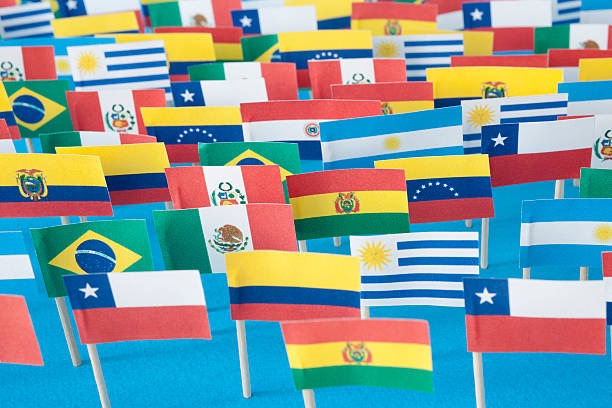
Bilingual Risk and Crisis Communication
By 2060, nearly 1 in 3 Americans will be able to speak Spanish. Previous NWS Assessments have linked casualties and fatalities to faulty communication in Spanish. I study how multilingual speakers receive, comprehend, and respond to life-threatening weather & climate hazards. Realizing that most local, state, and federal agencies leave these groups out in their disaster preparedness plans, I actively work to ensure underserved populations are included in future policy measures.
Publications of Interest
Advancing Next-Generation Warning Technology
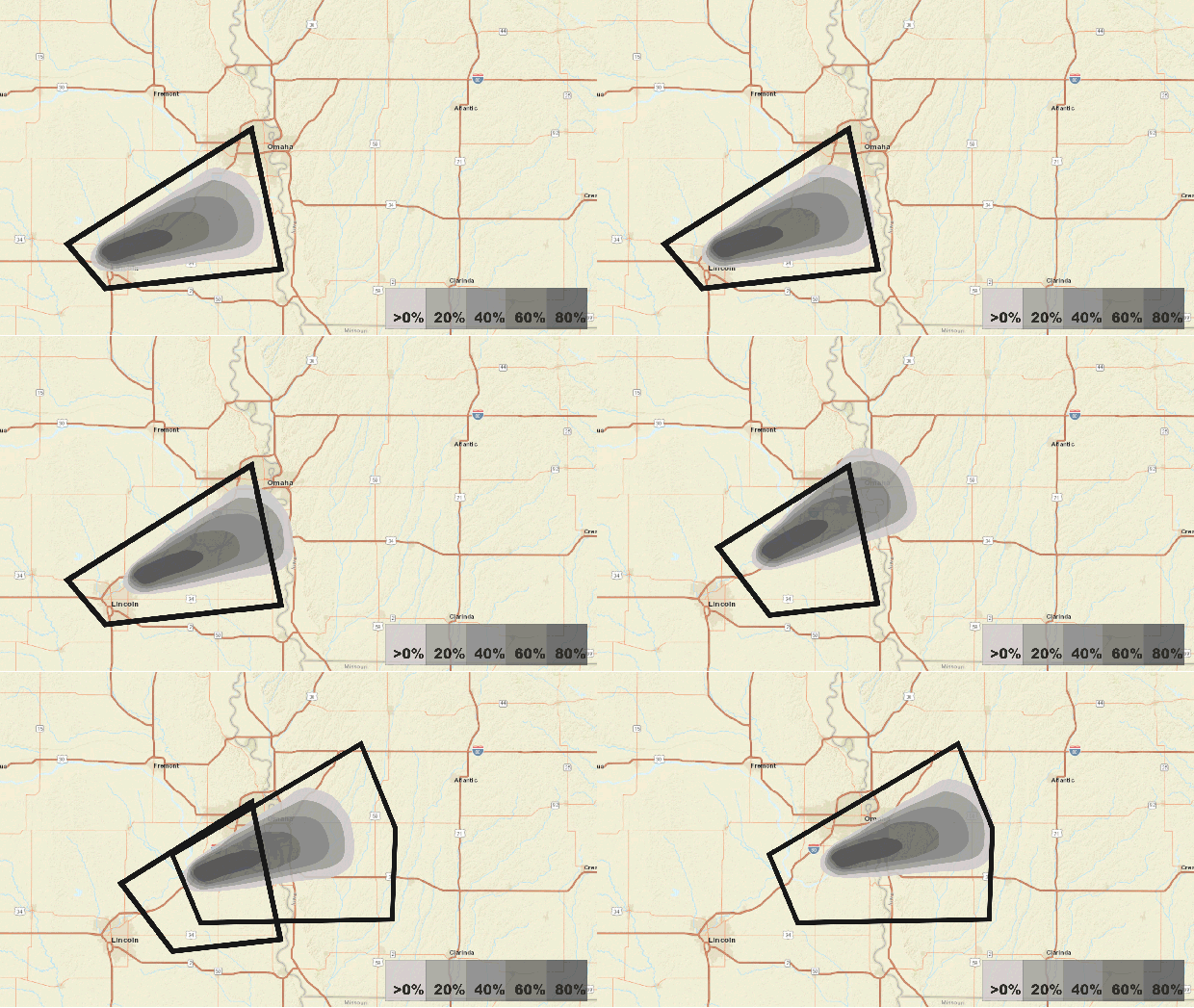
Scientists at NOAA are exploring how to use probabilistic information to communicate warnings for extreme weather hazards. The visualization above, known as probabilistic hazard information, could fundamentally change the way practitioners warn communities. My research in this realm applies a social science lens to explore best risk communication practices, through recommendation and co-production with broadcast meteorologists, emergency managers, and NWS meteorologists.
Publications of Interest:
In The News

When the storm came, alerts came only in English. This team is trying to change that
“Time and time again a monolingual emergency system prevents people from taking protective action,” he said. “For those that have just moved to this country and don’t have experience with things like tornadoes, that information is a matter of life and death.”
Joseph Trujillo Falcón, Incoming Distinguished Postdoctoral Research Associate, University of Illinois Urbana-Champaign

The US leads the world in weather catastrophes. Here’s why
“[Tornadoes] hit areas with large immigrant populations. People who fled Central and South America, Bosnia and Africa were all victims. A huge problem was that tornadoes really didn’t happen in those people’s former homes, so they didn’t know what to watch for or what to do, or even know they had to be concerned about tornadoes”
Joseph Trujillo Falcón, CIWRO/ NOAA NSSL/ NWS SPC
National Weather Service revises Spanish terms for severe storms
“Especially as our climate begins to make different types of disasters a lot more concerning, we need to make sure that everyone’s included in the disaster preparedness and response process,”
Joseph Trujillo Falcón, CIWRO/ NOAA NSSL/ NWS SPC

“Our climate is changing every day, and although sometimes that can make us a little nervous, I believe that with the correct information, we can move forward as a community”
Joseph Trujillo Falcón, CIWRO/ NOAA NSSL/ NWS SPC

“Muchas veces la gente no recibe esa información en su idioma natal y eso impide que vayan a refugiarse y, debo ser claro: eso es la diferencia entre la vida y la muerte.”
Joseph Trujillo Falcón, CIWRO/ NOAA NSSL/ NWS SPC

When Dangerous Weather Approaches, The Spanish Translation Problem Looms
“During its Spring 2021 meetings, the National Academies Board on Atmospheric Sciences and Climate (BASC) heard from experts like Trujillo-Falcón on the need for incorporating equity, justice, and diversity within the nation’s weather, climate, and water enterprise.”
Dr. Marshall Shepherd, University of Georgia

Language-inclusive Weather Information Saves Lives
“If a community has more of a Mexican population, for example, we need to focus on tornado threats. And if somebody is from Puerto Rico, we probably don’t need to spend more time looking at hurricane threats, because they’ve experienced them and [are] knowledgeable of them.”
Joseph Trujillo Falcón, CIWRO/ NOAA NSSL/ NWS SPC

‘Beyond the translation’: How Do You Convey ‘Tornado Warning’ in Spanish?
“Whenever we come to the United States, we might hear the word, say, ‘tornado warning’ or ‘hurricane warning,’ but we may not truly know the true implications of it just because of how we were raised and how we even came to learn about hazards in the first place,” Trujillo Falcón told AccuWeather. “The short answer is this can be applied across the board [to weather events], and not just translation, but also understanding of hazards and context in general.”
Joseph Trujillo Falcón, CIMMS/ NOAA NSSL/ NWS SPC

¡Alerta! Variations in Spanish Dialects Complicate Emergency Messaging
“It’s been something of a rally cry among a lot of bilingual meteorologists… It’s like, we know it, but we just haven’t been able to communicate it to the rest of our enterprise — but now people are listening. Our next step is to make sure we get a survey of the American audience, and we understand what words best convey the urgency.”
Joseph Trujillo Falcón, CIMMS/ NOAA NSSL/ NWS SPC

Translation Please: Improving Spanish Weather Forecasts
“By 2060, there will be more Spanish-speakers in the U.S. than anywhere else in the world other than Mexico. It’s important for us to diversify and better collaborate with and reach these communities.”
Joseph Trujillo Falcón, CIMMS/ NOAA NSSL/ NWS SPC

NWS Working on Building a Weather-Ready Nation and Spanish Initiative
“Dialects can get even more complicated in Spanish. So, I’ve embarked on a mission to make sure these translations would at least be a little more universal and fit all the Spanish dialects in the U.S. For example, you may tune in during the morning to a national network and see a different risk category than during your 5 p.m. newscast, because meteorologists may interpret the definitions differently since their Spanish is so different.”
Joseph Trujillo Falcón, OU CIMMS/ NOAA NSSL/ NWS SPC
Publications
Refereed Publications
Trujillo-Falcón, J. E., Montgomery-Vestecka, G., & Dunham, V. (2024). Spanish speakers in the United States report differing levels of weather salience based on their ethnocultural background. Weather, Climate, and Society, 16(4), 621-631, https://doi.org/10.1175/WCAS-D-23-0153.1
Trujillo-Falcón, J. E., Gaviria Pabón, A. R., Reedy, J. & Klockow-McClain, K. E. (2024). Systemic vulnerabilities in Hispanic and Latinx immigrant communities led to the reliance on an informal warning system in the December 10-11, 2021 tornado outbreak. Natural Hazards Review, 25(2), 04023059, https://doi.org/10.1061/NHREFO/NHENG-1755.
Tripati, A., Shepherd, M., Morris, V., Andrade, K., Whyte, K. P., David-Chavez, D. M., Hosbey, J., Trujillo-Falcón, J. E., Hunter, B., Hence, D., Carlis, D., Brown, V., Parker, W. L., Geller, A., Reich, A., & Glackin, M. (2024). Centering equity in the Nation’s weather, water, and climate services. Environmental Justice, 17(1), 45-53, https://doi.org/10.1089/env.2022.0048.
Obermeier, H. B., Berry, K. L., & Trujillo-Falcón, J. E. (2023). Understanding broadcast meteorologists’ current and future use of severe weather watches, warnings and Probabilistic Hazard Information. Weather, Climate, and Society, 15(4), 893-907, https://doi.org/10.1175/WCAS-D-23-0013.1.
Morales, A., Molina, M. J., Trujillo-Falcón, J. E., Nuñez Ocasio, K. M., Lang, A. L., Murillo, E., Bieri, C., Barrett, B. S., Avilés, L. B., & Camargo, S. J. (2023). Commitment to active allyship is required to address the lack of Hispanic and Latinx representation in the earth and atmospheric sciences. Bulletin of the American Meteorological Society, 104(7), E1290-E1313. https://doi.org/10.1175/BAMS-D-22-0075.1
Bitterman, A., Krocak, M. J., Ripberger, J. T., Ernst, S., Trujillo-Falcón, J. E., Gaviria Pabón, A. G., Silva, C., & Jenkins-Smith H. (2023). Assessing public interpretation of original and linguist-suggested SPC risk categories in Spanish. Weather and Forecasting, 38(7), 1095-1106. https://doi.org/10.1175/WAF-D-22-0110.1.
Tripp, D. D., Trujillo-Falcón, J. E., Klockow-McClain, K.E., Reeves, H. D., Berry, K. L., Waldstreicher, J. S., & Nelson, J. A. (2023). Foundational needs of forecasters for probabilistic winter forecasting. Weather and Forecasting, 38(1), 3-15, https://doi.org/10.1175/WAF-D-22-0116.1
Trujillo-Falcón, J. E., Gaviria Pabón, A., Ripberger, J., Bitterman, A., Thornton, J. B., Krocak, M. J., Ernst, S. R., Cassiani Obeso, E., & Lipski, J. (2022). ¿Aviso o alerta? A national survey on Spanish-speaker reception and interpretation of the current watch and warning system. Bulletin of the American Meteorological Society, 103(12), E2791-E2803, https://doi.org/10.1175/BAMS-D-22-0050.1
Obermeier, H., Berry, K., Klockow-McClain, K. E., Campbell, A., Carithers, C., Gerard, A., & Trujillo-Falcón, J. E. (2022). The creation of a research television studio to test Probabilistic Hazard Information with broadcast meteorologists in NOAA’s Hazardous Weather Testbed. Weather, Climate and Society, 14(3), 949-963, https://doi.org/10.1175/WCAS-D-21-0171.1.
Trujillo-Falcón, J. E., Reedy, J. Klockow-McClain, K. E., Berry, K., Stumpf, G. J., Bates, A. V., & LaDue, J. L. (2022). Creating a communication framework for FACETs: How Probabilistic Hazard Information affected warning operations in NOAA’s Hazardous Weather Testbed. Weather, Climate and Society, 14(3), 881-892, https://doi.org/10.1175/WCAS-D-21-0136.1.
Hurst, E. H., Trujillo-Falcón, J. E., Reedy, J., & Anderson, C. (2021). Citizen deliberation at South Carolina’s ‘Our Coastal Future Forum’: Talking through risk related to climate change. Journal of Risk Research, 25(6), 764-777, https://doi.org/10.1080/13669877.2021.2020882..
Trujillo-Falcón, J. E., Bermúdez, O., Negrón-Hernández, K., Lipski, J., Leitman, E. M., & Berry, K. (2021). Hazardous weather communication en español: Challenges, current resources and future practices. Bulletin of the American Meteorological Society, 102(4), 765-773, https://doi.org/10.1175/BAMS-D-20-0249.1.
Government and Policy Reports
Trujillo-Falcón, J. E., Montgomery-Vestecka, G., Dunham, V., and Mejia, J. Weather and culture: A national survey of Spanish speakers in the United States. UIUC Reference Report. https://doi.org/10.17603/ds2-cmhy-zr95.
Bitterman, A., Ripberger, J., Silva, C., Jenkins-Smith, H., Trujillo-Falcón, J. E., Gaviria Pabón, A., & Ernst, S. (2024). Continuing the baseline: Public receptions, understanding, and responses to severe weather forecasts and warnings for U.S. Spanish speakers. Institute for Public Policy Research and Analysis Reference Report. https://doi.org/10.7910/DVN/JFLKOJ.
Bitterman, A., Ripberger, J., Silva, C., Jenkins-Smith, H., Trujillo-Falcón, J. E., Gaviria Pabón, A., & Krocak, M. (2023). Expanding the baseline: public receptions, understanding, and responses to severe weather forecasts and warnings for U.S. Spanish speakers. Institute for Public Policy Research and Analysis Reference Report. https://doi.org/10.7910/DVN/Q5SCBB
Bitterman, A., Ripberger, J., Krocak, M., Silva, C., Jenkins-Smith, H., Trujillo-Falcón, J. E., and Gaviria Pabón, A. (2022). Developing a baseline: Public perception, understanding, and responses to severe weather forecasts and warnings for U.S. Spanish speakers. Institute for Public Policy Research and Analysis Reference Report. https://doi.org/10.7910/DVN/IZNQVA.
Krocak, M. Ernst, S., Ripberger, J., Williams, C., Trujillo-Falcón, J. E., Gallo, B., and Marsh, P. (2021). The National Weather Service Storm Prediction Center’s convective outlook: Conclusions from past research and recommendations for future development. National Oceanographic and Atmospheric Administration FY 2021 Milestone Report.
Non-Refereed Publications
Trujillo-Falcón, J. E. (2024). Examining Warning Response Among Spanish Speakers in The United States to Enhance Multilingual Wireless Emergency Alerts. [Dissertation, University of Oklahoma]. ShareOK Repository. https://shareok.org/handle/11244/340567
Orr, M., Cook, J., Borth, A., Sublette, S., Maibach, E., Lewandowsky, S., Lindmeier, Trujillo-Falcón, J. E. (2022). Climate myth debunking for broadcast meteorologists. George Mason University Center for Climate Change Communication Handbook. https://www.climatechangecommunication.org/handbook/climate-myth-debunking-for-broadcast-meteorologists/.
Trujillo, J. E. (2019). Rhetoric and climate: Organizational influence on public policy related to Hurricane Harvey (Embargoed– Available upon request) [Thesis, Texas A&M University]. OAKTrust Repository.
Notable Conference Presentations
Trujillo-Falcón, J. E., Lipski, J., Leitman, E., Bermúdez, O., Negrón, K., & Berry, K. (2021, January). Creating unifying risk messages en español: Frameworks for translation and interpretation. 16th Symposium on Societal Applications, 101st American Meteorological Society Annual Meeting, New Orleans, LA. (First Place Overall Oral Presentation)
Trujillo-Falcón, J. E., Lee, S. K., Berry, K., Obermeier, H., Klockow-McClain, K. E., Campbell, P. A., Meyer, T., Williams, S., Ernst, S., & Landeros, E. (2021, January). Applying social scientific concepts to enhance R2O: Analysis of 2018 and 2019 NOAA Hazardous Weather Testbed Probabilistic Hazard Information experiments. 11th Conference on Transition of Research to Operations, 101st American Meteorological Society Annual Meeting, New Orleans, LA. (Second Place Overall Oral Presentation)
Yas, V., Sánchez Núñez, P., Trujillo-Falcón, J. E., Schultz, C. J., Murphy, K. M., Romero, A., Torres, M., & Bianchi, C. (2021, January). ¿When thunder roars go indoors? Spanish-Language resources for National Lightning Safety Awareness Week. 9th Symposium on the Weather, Water, and Climate Enterprise, 101st American Meteorological Society Annual Meeting, New Orleans, LA.
 Joseph Trujillo Falcón